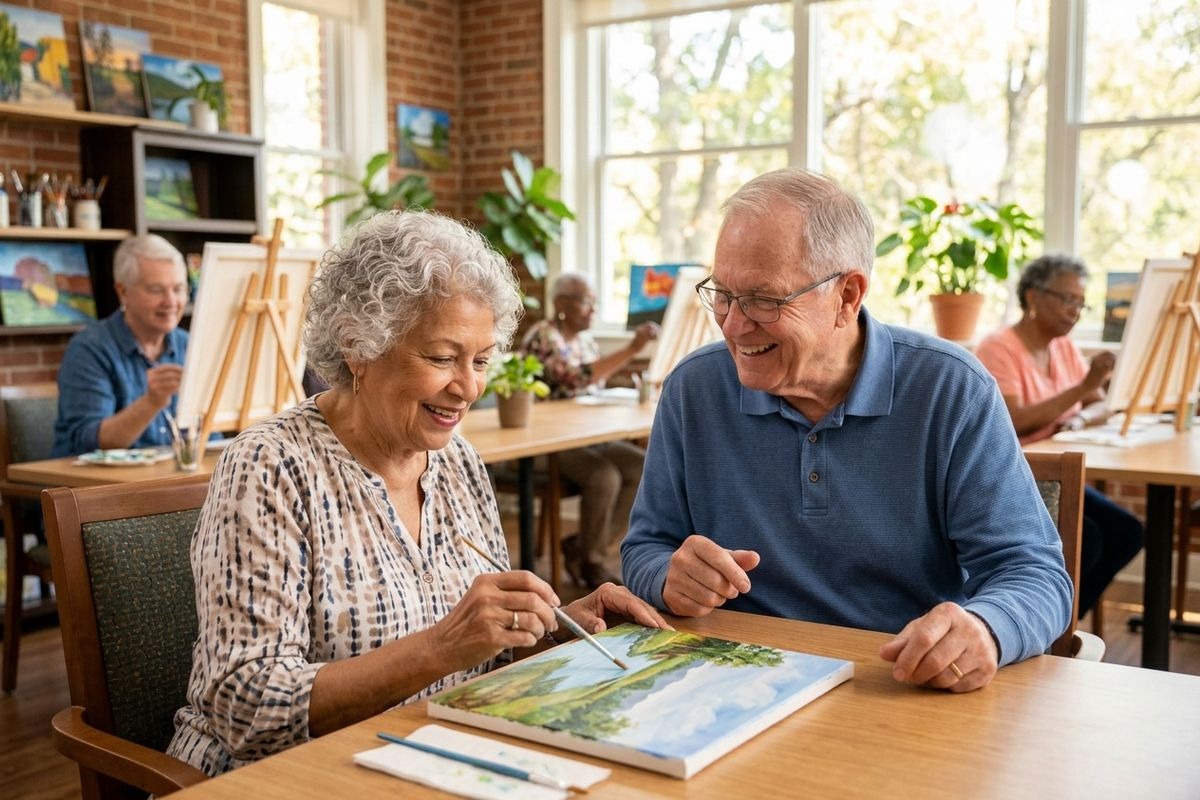
Two smiling older adults painting a landscape canvas together at a table in a warmly-lit art class, with other seniors painting in the background.
Key Takeaways
- Learning at any age supports memory, focus, and overall brain health.
- Group classes and shared hobbies naturally build social connection.
- Assisted living and memory care communities often offer engaging, personalized programs.
- Staying curious can improve your quality of life in meaningful, everyday ways.
- Lifelong learning doesn’t have to be formal. Even reading or games count.
Why Learning Never Has an Age Limit
There’s a certain spark that comes with learning something new. Maybe it’s finally picking up the guitar you’ve always wanted to play, or discovering a podcast that makes your morning walk fly by. That sense of curiosity doesn’t fade with age, and when you feed it, something wonderful tends to follow.
Lifelong learning can support your mental sharpness, strengthen your social connections, and bring a deep sense of purpose to your everyday life. Whether you’re a senior yourself or a family member looking out for a loved one, understanding how learning fits into Merryvale Assisted Living and senior living more broadly can open doors you may not have considered yet. From daily activities to community programming, there are so many ways to stay engaged through enriching events and programs designed with your interests in mind.
How Lifelong Learning Supports Brain Health
Keep Your Mind Active and Sharp
Your brain responds well to a challenge. When you pick up a new skill, like learning a few phrases in another language, playing chess, or trying out a new recipe, your mind works hard to process and retain that information. That kind of mental exercise can strengthen memory and sharpen focus over time.
Activities like music, puzzles, and creative hobbies give your brain a consistent workout. Think of it like a daily walk, but for your mind. The more regularly you engage it, the more you support long-term cognitive wellness in a natural, enjoyable way.
Simple Ways to Stay Mentally Engaged
Staying mentally active doesn’t have to mean enrolling in a formal class. Online videos, audiobooks, and podcasts are easy to access and cover just about any topic imaginable. You can explore history, cooking, photography, or even astronomy right from a comfortable chair.
Even lighter activities like word games, crossword puzzles, or casual reading count as meaningful brain exercise. It’s less about the difficulty level and more about staying consistently engaged. Memory improvement games are a great place to start, and a little mental movement every day can go a long way.
The Social Side of Learning New Things
Connection Through Shared Interests
One of the quiet rewards of learning something new is how naturally it brings people together. When you join a group class or a hobby club, you’re surrounded by others who share your curiosity. That common ground makes conversation easy and friendships feel genuine.
For older adults, social connection plays a big role in overall well-being. Group learning settings create a warm, low-pressure environment where people can open up, laugh together, and feel a sense of belonging. That kind of community can make a real difference in daily life, especially when staying socially connected is a priority.
Bridge the Gap Between Generations
Learning doesn’t have to happen within a single age group. When families learn something together, a new card game, a cooking technique, or even a creative project, it becomes a shared experience that naturally deepens those bonds. Those moments tend to stick around long after the activity ends.
Mixed-age groups also open doors to new friendships that might not have formed otherwise. A younger person teaches something tech-related, an older adult shares a forgotten craft, and suddenly both walk away richer for the exchange. That kind of connection is genuinely good for everyone involved. Exploring ways to change your perspective about aging can make these shared moments feel even more meaningful.
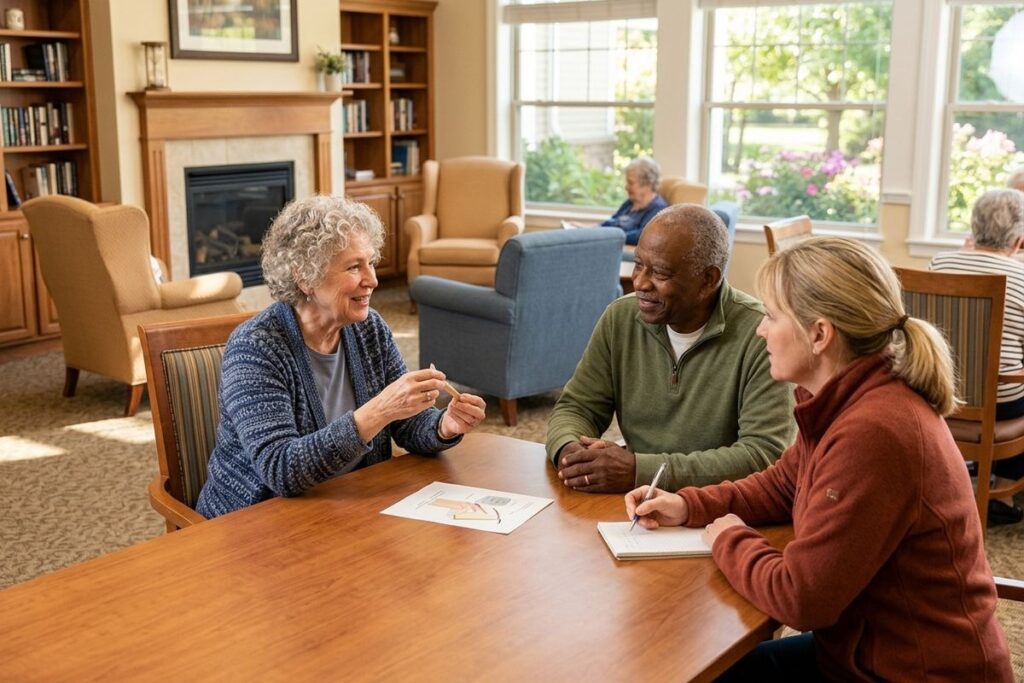
Three adults sit at a wooden table in a lounge, smiling and talking, one taking notes. Bookshelves and fireplace in background.
What Lifelong Learning Looks Like in Senior Living
Programs That Match Your Interests
Many assisted living communities today offer a wide range of classes, activities, and programming designed to keep residents engaged and inspired. From art workshops to book clubs to fitness classes, there’s usually something that aligns with your personal interests and lifestyle.
Personalized programming matters because not every person connects with the same activity. A thoughtful senior living community takes the time to understand what genuinely excites each resident and builds opportunities around that. When programming feels personal, participation tends to feel joyful rather than routine.
How the Right Environment Makes a Difference
A warm, supportive community naturally encourages curiosity. When your surroundings feel safe and welcoming, it’s easier to try something new without pressure. That kind of environment is something memory care and assisted living communities work intentionally to create.
Respite care stays can also include access to enriching daily activities. So even during a short-term visit, your loved one can enjoy meaningful engagement and a sense of connection. Every stay, regardless of its length, can be full of purpose.
Take the Next Step Toward a More Vibrant Life
Lifelong learning can truly thrive in a community built around warmth, encouragement, and genuine care. When your days include activities that spark joy and curiosity, life feels fuller and more rewarding. That’s exactly the kind of experience a thoughtful senior living community can help make possible.
At Merryvale Assisted Living, we offer assisted living, memory care, and respite care in a community that genuinely puts residents first. Reach out today to schedule a tour and see the programs, spaces, and friendly faces that could make all the difference for you or someone you love.